The Origin of Totally Righteous

FeaturedThe Origin of Totally Righteous

I’m sure many people these days have stories to tell about their experience during 2020, and how that year changed things in their lives, or how it shaped their perceptions of things like the size of the world, the capabilities of the government, and the way that news is reported (or not reported). Some people lost jobs, and many people lost family members – both during the pandemic, and in the aftermath of it. There’s a lot of debate about this, still today… I think that’s because our individual experiences of what happened are all somewhat unique, despite the same set of general circumstances being unexpectedly hoisted on everyone at the same time. People responded differently to the global, national, and regional circumstances, based on their own set of personal circumstances. What I mean is, people in New York City were compelled to respond a certain way, given the number of people there, the population density, and the fact that it’s an international hub of travel, trade, and commerce, on the northeastern border of the country. People in Los Angeles were compelled to respond another way, for similar reasons. And people in the small town of Clinton, Indiana, responded a completely different way.

Sure, there were elderly people, those with other serious health issues, those with compromised immune systems, and so on, who took extra precautions. But still, I remember quite vividly, going out to get gas on the first day of the “lock down,” (partly because I thought the price of gas might skyrocket, and partly because I was curious about what other people were doing) and realizing on that sunny, breezy day in mid-March, whilst waiting for my tank to fill and looking around, that absolutely nothing was different in the middle of town.

The same stuff was happening that day that would naturally be happening on any day in Clinton with that kind of weather – people walking their dogs, young couples walking down the sidewalk hand-in-hand, mothers strolling their babies, drunks stumbling in and out of the liquor store, the IGA buzzing with activity, the Dairy Queen drive-thru at full capacity, and the smell of carne asada wafting through the air from Taco Tequila’s. Nothing was really different, at least outside in the open air. But of course, indoors, everyone’s lives were still changed in some way, or at least impacted – either temporarily or permanently.

And my life changed a little bit too. But not in a bad way.

I was in my fifth year as the preacher for my small, country church – Dailey Chapel Christian Church. And that was the year I finally realized how to preach a halfway decent sermon. I have a lot of people to thank for this realization, the Lord most of all, of course. But the pandemic actually helped me in this regard too.

I had an epiphany of sorts, that Spring.

You see, despite having degrees from Bible college and seminary, I had never taken preaching classes, because I didn’t want to be a preacher. I had explored a few other areas of vocational ministry prior to serving Dailey Chapel, but nothing lasted. But God slowly closed all the other doors I was trying to walk through, until preaching behind a pulpit was the only one still open.

So, quite reluctantly, I walked through that door, and began the process of stumbling and bumbling my way through one sermon after another, in front of my congregation. Dailey Chapel proved, immediately, to be a group of people that, despite my difficulties and struggles, were willing to encourage me, support me, love me, and allow me the time and space to learn.

And eventually, in the Spring of 2020, I realized something about preaching that is probably quite obvious to most other preachers… I could actually write my entire sermon out, word for word. Moreover, I also learned that there is even a name for this style of preaching – “manuscript style.” I’d always been a decent writer, but not that good of a speaker. And having grown up watching other preachers, and seeing other preachers on TV or on podcasts, I thought I had to have a basic outline of what I was going to say, and then just “let the Spirit speak through me.” But that never seemed to work. God’s Spirit grants all Christians specific gifts, and one of mine is writing… once I realized I could preach what I wrote, everything changed.

2020 helped me figure that out.

Our church responded to the COVID lock downs by having people stay outside in the parking lot, while I preached from the side porch of the church building. But even so, I still wanted to reach people that weren’t going to be there at all, and we weren’t interested (like many other churches) in doing a video livestream. But I did discover that I could record the audio of my sermons, and upload them to a website called SoundCloud – which would enable me to post links to the sermon on our church’s Facebook page, or even send the links to individuals via text message. But the prospect of recording my sermons, caused me to realize that I had to have them all written out beforehand – every single word. You can’t say, “um” a lot, or have long pauses………………….. when you’re recording something. Thus, I began using my writing gift to craft sermons.

About a year later, as I was struggling to come to terms with a new set of medical circumstances in my life – a condition known as atrial fibrillation – which is relatively common among people over the age of 60, but less so for those in my age range, I was compelled to start thinking of my longer term plans in regards to preaching. When your heart starts to beat wonky, and they put the paddles on you to shock you back into normal heart rhythm… well, that tends to cause a person to think about their mortality, and what they are going to leave behind when the Lord calls them home. Well, that’s what I started thinking about a lot more anyway. What was I doing with my life, and how was I doing it, and how could I do it better by utilizing the gifts that God has given me?

I had always been teaching through individual books of the Bible, since first coming to Dailey Chapel. And I wanted to continue doing that. But having just finished Matthew’s Gospel at the time, I was ready to look ahead, and begin a new sermons series. For this one, I would be starting fresh. It was while preaching through the last four chapters of Matthew that I had begun writing out my sermons. Whatever new series I began, with a new book of the Bible, would have completely written out sermons from the get go.

After praying about which book of the Bible to preach through, I felt a strong pull toward Paul’s letter to the Romans. I had read through Romans several times, since my early 20s, and of course, there are many great one-liners in the letter which I had heard many many times since I was a kid:

“…there is now no condemnation for those who are in Christ Jesus” (8:1). “The Spirit himself testifies with our spirit that we are God’s children” (8:16). “…our present sufferings are not worth comparing with the glory that will be revealed in us” (8:18). “And we know that in all things God works for the good of those who love him, who have been called according to his purpose” (8:28). “…If God is for us, who can be against us?” (8:31). “…we are more than conquerors through him who loved us." "For I am convinced that neither death nor life, neither angels nor demons, neither the present nor the future, nor any powers, neither height nor depth, nor anything else in all creation, will be able to separate us from the love of God that is in Christ Jesus our Lord” (8:37-39).

And that’s just from Chapter 8!

But I really wanted to go through the entire letter, verse by verse, and understand it in its entirety, while sharing the fruits of my study, with the congregation that has given me so much over the years.

And well, it took about three and a half years – nearly four – but I eventually made it all the way through Romans, by the Lord’s grace.

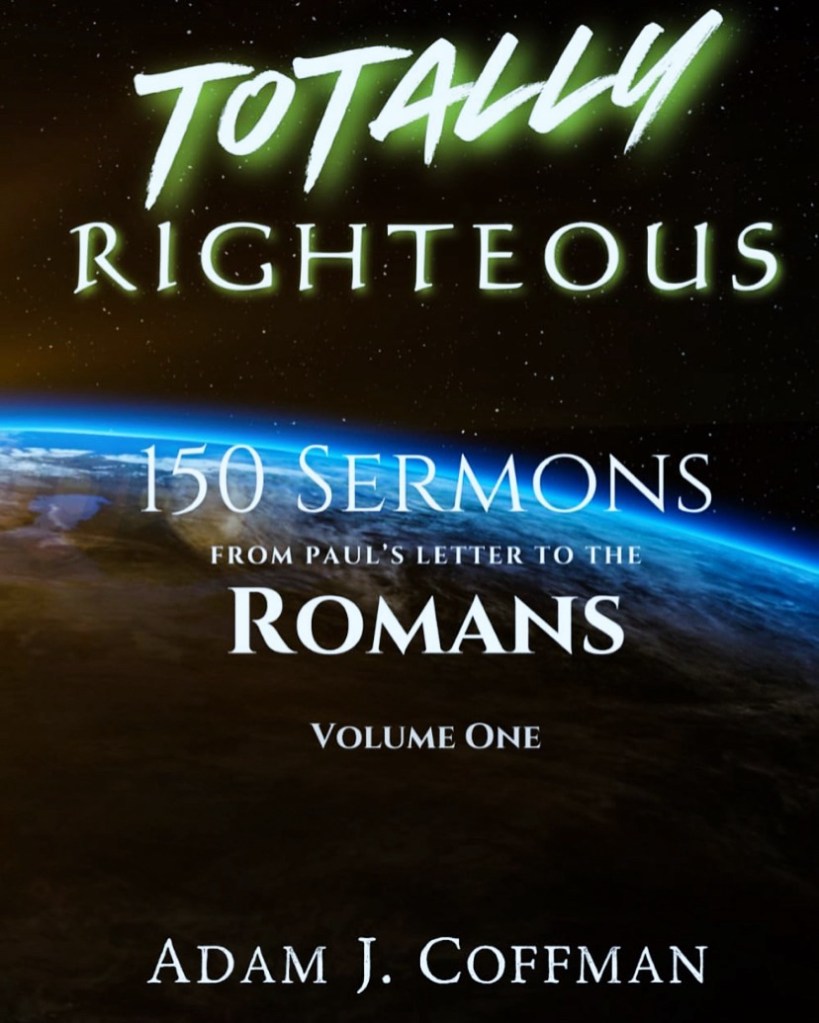
And now, I have published the first volume of these sermons, which total 150.

This is the first of a three-volume series comprising these 150 expository sermons on the Letter of Romans.

Again, these are fully written, manuscript style messages, that I delivered to my congregation – Dailey Chapel Christian Church – over the course of almost four years.

Volume One contains the first 49 sermons and covers Romans 1 through 4, with significant detours into the Book of Genesis.

I’m currently editing the next two volumes, which will be available in the coming months. But Volume One is available here, in hardback and Kindle ebook:
https://a.co/d/am7InFr

The Cost of Being a Disciple of Jesus

FeaturedThe Cost of Being a Disciple of Jesus

DISCLAIMER: I originally wrote this sermon four years ago, in August of 2020. If you want to listen to it, I’ll embed the audio version at the bottom of this post.

But I’m trying to publish more regularly on this blog because that’s what you’re apparently supposed to do…

So, I pulled this one out of the archives, because it’s a real humdinger. And you should read it. Seriously, it’s a good one, if I do say so myself.

____________________________________

This morning, we’ll be reading through a passage from Luke 14:25-33.

But before we take a look at this passage in Luke, I want to tell you a story that’s a little bit closer to us in history. This isn’t something that happened 2,000 years ago, but much more recently.

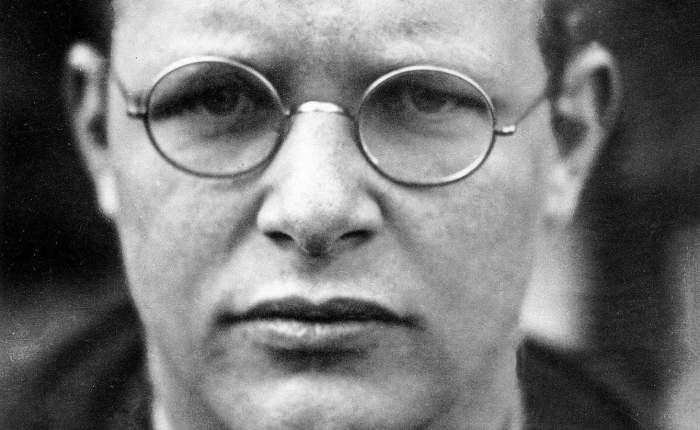
It begins about a hundred years ago, in a city called Breslau. Breslau is in the southwest of Poland today, but a hundred years ago, and up until the end of World War II, it was still a part of Germany. And that’s where this story begins – in Breslau, Germany, a hundred years ago, in 1920, when a young man by the name of Dietrich gave his life to Christ, and decided that he wanted to study the Bible and become a teacher of God’s word.

Dietrich was a very intelligent young man, very devoted to his studies; by 1927 (when he was only 21 years old) he had graduated from the University of Berlin with a doctorate in Theology. Still young, and not quite sure where his place was in the world, he decided to come here to the U.S., and ended up as a professor at Union Theological Seminary in New York City. He was only in the U.S. for one year, but while he was here, he was lovingly accepted into a Baptist church in Harlem, where he taught Sunday School classes, and where he began to encounter the societal injustices being experienced by Christian minorities – in particular, black Christians that he had become friends with. As a white man, but still an outsider, a foreigner from Germany, he had slipped in between these two segregated worlds of American Christians – black and white, rich and poor, educated and uneducated. Dietrich knew his Bible really well. In the Gospels, he read, as we have been reading, about the reality of God’s Kingdom in the here and now. And he wrestled with the contrast between what he was reading about the Church in the New Testament, and what he was seeing the Church do (and not do) in New York and other places.

How could the Church in the New Testament be so united in purpose, and the Church of modern day be so fractured and divided?

Why was the wealthy Church so pre-occupied with its own position on the highest levels of secular society, and so blind to the suffering of the poor Church just a few blocks North?

How does that happen among God’s people? How does one group of Christians become obsessed with finding a seat at the table of high society, while another group focuses on pulling people out of the gutters and giving them food, and clothing, and housing?

Why do the Christians with the most resources at their disposal, hoard their wealth, while those with just enough to get by give away everything they have? Why can’t they work together? Why can’t they find balance in the community of God’s Kingdom – the community of people saved by grace – the community that Jesus gave his life to bring into existence?

What was the answer to these questions?

What could be done about it?

Dietrich wasn’t entirely sure, but he didn’t ignore these tough questions; he wrestled with them. And this unique perspective that he had, as an outsider and foreigner, influenced him a great deal. And he took that perspective with him, when he returned to his homeland in 1931.

When he returned to Germany, he began teaching theology at the University in Berlin where he had received his doctorate four years earlier, and not long after that, he was ordained as a pastor in the Lutheran Church.

And, it was less than two years later, on January 30, 1933, that the Nazis took control of his country.

As we all know now, with our 20/20 historical hindsight, Adolph Hitler’s rise to power would eventually culminate in the horrendous disaster that we call World War II, where millions of people would perish, and where terrible things had to be done in order to stop a man that was closer to an example of the Anti-Christ than almost anyone else in history.

Have there been others like Hitler?

Yes.

Joseph Stalin probably executed more people, for instance. But Hitler did three things that really single him out:

1. He lied to the Christians in Germany that were susceptible to deception.

2. He silenced, imprisoned, and killed the Christians who were not so easily deceived.

3. He waged genocide against the Jewish people.

If Hitler had succeeded in taking over the WHOLE WORLD, he would have been THE Anti-Christ.

As it turned out, he was only one of the many little antichrists like those the Apostle John warned us about in his first epistle (1st John 2:18).

Like I said, we all know this now. It’s more or less common knowledge. But to many of the Christians throughout Germany at the time Hitler took power it wasn’t as clear. Even though it SHOULD HAVE BEEN.

Hitler’s rise to power was hailed as an act of God by the majority of church leaders in Germany at the time. They threw their support behind him completely – telling their congregations that Hitler had been sent by God to lift them out of economic depression, and restore their honor on the world stage. Some went so far as to say that Hitler spoke on God’s behalf, and that the fulfillment of God’s Kingdom was embodied in the person of Adolph Hitler. Churches that had been firmly established and rooted in place for centuries, wasted no time in allowing Hitler to steam roll his way through them. In fact, they stepped aside as he removed Pastors, Bishops, and Elders who were not “pure-bloods” of Aryan descent. They remained silent when he demanded that he, the Fuhrer be recognized as head of the Church (rather than Jesus Christ), and they supported efforts made to remove the Old Testament from the Bible – because of its pro-Jewish agenda. These were not things that happened overnight. They were ideas that Hitler had been preaching for months BEFORE he was in power. There was plenty of opportunity for the churches in Germany to at least try to prevent his ascension to power – by speaking out against him. But those with the most influence in their society, remained silent. Or they openly supported him.

But not everyone.

There were small groupings of Christians in Germany, in the middle of all that madness, who refused to bow down and worship that man.

And the hero of this particular story – Dietrich – was among them.

Just a couple of days after Hitler became Chancellor, Dietrich was able to get onto a radio station in Berlin and sound the alarm.

Before they cut him off mid-sermon, he denounced Hitler and everything he stood for – and he rebuked every Christian who followed him for their idolatry to the “cult of the fuhrer.”

In the months and years that followed, he began organizing the minority groups of Christians who didn’t follow Hitler, by helping to create a network of churches dedicated to voicing opposition to him, as well as to rendering aid to their Jewish neighbors who were already under attack. He was putting into practice what he had learned when he was in New York – that he couldn’t just talk about the Gospel – he had to live in its reality. He couldn’t just stand around and do nothing while so much evil was taking place around him. He had to actually do something about it.

So, he did.

Between 1933 and 1939, he helped organize and lead an underground seminary where he taught his students that the cost of being a modern disciple of Jesus was complete loyalty to the King and His Kingdom, above all else. –Even if it meant losing your friends, losing your family, or losing your country.

And for this, Dietrich was branded an enemy of the state, his coalition of churches and his seminary were deemed illegal by Heinrich Himmler, and Dietrich himself was exiled from the city of Berlin.

Dietrich’s friends in New York City urged him to flee the country, and he did in the Summer of 1939. But he did not stay in the United States for very long. In a letter to one of his former professors at Union Seminary, this is what he wrote, shortly before returning to Germany:

“I have come to the conclusion that I made a mistake in coming to America. I must live through this difficult period in our national history with the people of Germany. I will have no right to participate in the reconstruction of Christian life in Germany after the war if I do not share the trials of this time with my people … Christians in Germany will have to face the terrible alternative of either willing the defeat of their nation in order that Christian civilization may survive or willing the victory of their nation and thereby destroying civilization. I know which of these alternatives I must choose but I cannot make that choice from security.”

It wasn’t long after his return home, that because of close trusted contacts within the German military, he first became aware of concentration camps where Jews were being systematically exterminated. And that put Dietrich in the position of finally having to choose, definitively, which of his two kingdoms he would betray.

Would he become a traitor to Germany? Or would he become a traitor to God’s Kingdom, by looking the other way as his neighbors were being murdered? He chose God’s Kingdom over the kingdom he had been born into.

When asked by a Dutch colleague of his at the time, “what he was praying for these days?” Dietrich told him, “If you want to know the truth, I pray for the defeat of my nation.”

And that’s when Dietrich became a spy.

He began working within the Abwehr – the German Military Intelligence network –which was not yet under the control of the SS. There were many German officers in the Abwehr, already functioning as allied spies against Hitler. They recruited Dietrich with the understanding that he would use his contacts in Europe and the United States to smuggle intelligence to the Allies, and to help Jews escape from Germany. And that’s what he did for the next few years…

Before he was eventually caught and arrested in the Spring of 1943.

Dietrich spent two years in prison for treason, during which time he was the pastor for his fellow prisoners, and even some of his prison guards.

On April 4, 1945 Hitler personally ordered Dietrich’s execution, and he was hung that same week at Flossenburg Concentration Camp.

Two weeks later, the U.S. 90th and 97th Infantry Divisions liberated that camp.

A week after that, the Soviets took Berlin.

Hitler committed suicide at the end of the month, and Germany surrendered on May 7th.

Dietrich’s prayers for the defeat of his nation came to pass. But he himself, had already gone home to his real country.

The doctor who saw Dietrich’s hanging described his final moments like this:

“I saw [the] Pastor … kneeling on the floor praying fervently to God. I was most deeply moved by the way this lovable man prayed, so devout and so certain that God heard his prayer. At the place of execution, he again said a short prayer and then climbed the few steps to the gallows, brave and composed. His death ensued after a few seconds. In the almost fifty years that I worked as a doctor, I have hardly ever seen a man die so entirely submissive to the will of God.”

And that brings, the story of Dietrich Bonhoeffer to a close.

Now… why am I telling you all of this? Why is this story an important one?

Well, let’s finally get to Luke 14:25-33, and you’ll see why…

“Large crowds were traveling with Jesus, and turning to them he said: 26 “If anyone comes to me and does not hate father and mother, wife and children, brothers and sisters—yes, even their own life—such a person cannot be my disciple. 27 And whoever does not carry their cross and follow me cannot be my disciple.

28 “Suppose one of you wants to build a tower. Won’t you first sit down and estimate the cost to see if you have enough money to complete it? 29 For if you lay the foundation and are not able to finish it, everyone who sees it will ridicule you, 30 saying, ‘This person began to build and wasn’t able to finish.’

31 “Or suppose a king is about to go to war against another king. Won’t he first sit down and consider whether he is able with ten thousand men to oppose the one coming against him with twenty thousand? 32 If he is not able, he will send a delegation while the other is still a long way off and will ask for terms of peace. 33 In the same way, those of you who do not give up everything you have cannot be my disciples.”

Now, those are some harsh sounding words, are they not?

There’s a huge crowd following Jesus, and instead of reveling in all of his many followers, it’s almost as if he’s trying to get rid of them. He tells them they can’t follow him unless they hate everyone else… that they even have to hate their own life! Now, he doesn’t mean this literally – that they have to hate. After all, this is Jesus – he teaches us to love everyone, even our enemies.

So, he’s not literally telling us we have to hate ourselves and our families. He’s saying that His Kingdom always comes first. The Kingdom always takes precedence. He’s saying that our love for Him has to be total. Our loyalty to Him has to be complete. He’s saying, if you really want to follow me, you might have to say goodbye to the people you care about. He’s saying: If you say ‘yes’ to me, you might have to say ‘no’ to the people you love.

Jesus is using this allegorical language about building towers and going to war, which might all sound a little strange to us. But he’s pointing out the natural human tendency to look ahead. If we’re being wise, then we think before we make a major decision about something; we think about what that decision is going to mean, and whether or not it’s going to be good or bad, and we think about what we’re going to have to give up, or let go of.

We have to estimate what it’s all going to cost.

How much money to build that building?

How many troops to win that war?

Well, we don’t have to estimate what it costs to follow Jesus; he tells us EXACTLY what it costs – it costs EVERYTHING.

Dietrich knew that. He knew it really well. He knew that we can’t just hide in the comforting glow of God’s grace – that to do so, cheapens the sacrifice that Jesus made. We have to go into the darkness with the light that we have.

We have to do something.

And whatever that is – it might cost us everything.

It MIGHT cost us family; It MIGHT cost us friends; It MIGHT cost us our country.

And if so, that’s ok.

That’s what it means to pick up YOUR CROSS and FOLLOW HIM.

In John 15:18-19, Jesus said quite clearly: “If the world hates you, keep in mind that it hated me first. 19 If you belonged to the world, it would love you as its own. As it is, you do not belong to the world, but I have chosen you out of the world…”

Let’s remember these words of Jesus in the coming months.

Let’s hold tightly to them, as the rhetoric in the world around us becomes louder, and the nonsense becomes overwhelming. Our job is still the same: To love our neighbors, to love our enemies, and to love God the most.

The kingdom we’re living in is temporary; it is crumbling. But the Kingdom we belong to is eternal, and it will never fall.

There won’t be any Democrats or Republicans in Heaven, my friends.

“Then the sovereignty, power and greatness of all the kingdoms under heaven will be handed over to the holy people of the Most High. His kingdom will be an everlasting kingdom, and all rulers will worship and obey him.” – Daniel 7:27

Featured

The Churchmare Before Christmas

It was the night before Christmas, when up at the church,
the preacher had arrived for a midnight search.

In his office among all the books and the notes,
he’d stashed his old sermons in some small plastic totes.

Christmas Sunday was tomorrow, it was almost here,
and the preacher was taken by that preacherly fear…

That he had no sermon for that Christmas Day,
that he had no words, and nothing special to say.

So he’d gone to the church in the middle of the night
despite the dark and the risk of frostbite,

to find and old story that he’d written a few years before…
It was about Silent Night during the First World War.

But he just couldn’t find it, in all of his files.
It wasn’t in his computer or in his office stockpiles.

Defeated and tired he looked at the clock; what would he do?
He had no sermon, and it was half past two.

And so, disappointed he sat down, in his brown leather chair,
and he bowed his head to say a desperate prayer.

But the church was dark, and it was warm and quite cozy,
and before he knew it, he was feeling a bit dozy.

As sometimes happens, when we last resort to pray,
we happen to fall asleep and wake up the next day.

And thus away he went into Never Never Land,
and lost several more hours in a way he hadn’t planned.

When he finally woke up and regained his sense,
he discovered that Sunday service was about to commence…

Everything seemed normal; the lights were all on, and all was in place.
So he just rose from his chair, and put on his best poker-face.

Then he took a look around, and he surveyed the room.
It was no longer dark and shrouded like a tomb.

It was full of brightness; it was calm and serene.
Annette and Carson had swept up the dust, and made it all clean.

There was the hand sanitizer placed by the foyer with care—
since the Spring of 2020 it was the same bottle that had been there.

The children had gone with Karlie and Kloe down the stairs,
to learn about Jesus, and to say their prayers.

Ben Jackson was there nestled, all snug in his pew,
after arriving at church early, to make good use of the loo.

But something was still missing, something was still wrong—
the thing that had made the Preacher, pry himself out of bed hours before dawn…

He had no sermon, so what would he say?
This was no ordinary service, this was on Christmas Day!

Well, Doctor Nicholas and the Wheats could tell with one look,
that the Preacher was sweating when he opened the good book.

The Nepotes, and Lunsfords, the Natale’s, and Sandy, and Alicia too,
the preacher looked at them and wondered, if they could tell… if they knew…

And what about all the others? He glanced all around,
but he was only humbled by all the smiles he found.

Mary Kay and Sarah were right where they always sat.
Vicki and Julia – across the aisle from where the Engle’s used to sit beside Pat.

At the piano was one of five people – (I didn’t know when I wrote this story)
if it was gonna be Grant, Terri, Carmen, Judy, or Lori.

Roseann was all ready to call out the first song,
as Jerry once did for the congregation to sing along.

George was smiling, with a twinkle in his eye,
I think he knew what was up, but he was too kind to ask why.

The Harpolds were there, in the second row on the right…
wondering if the Preacher was feeling alright.

They said hello, and they smiled as they usually did,
just like Karen, and the Cox’s, and Carson the kid.

Michael, Angie, and the Dickeys were all there in their pew,
as patient and faithful as Farmer Shew.

And back in the back like Ebenezer’s Stone,
sat Mr. Chet – sometimes with Kailynn, but never alone.

There was the Jukes’, and Ginni, and Jalen too,
and let’s not forget little Sylvie, the Christmas pooh.

But where was Jordan? He’d been here before…
we all missed him and his track suit of soft red velour.

But we also missed others, like old Jim Trout,
and some that were still with us, but they were out and about.

Where had they gone, what had taken them away?
Well, I don’t really know, but maybe we’ll see them again on Easter Sunday.

But, even though some were gone, new ones had come along—
little ones that to our Lord belong; they are weak, but he is strong!

There was the Methenys, and the Kelleys, and the Overpecks, and their brood—
who always came prepared with toys, and with food.

The Preacher was thankful for all of the people,
because to really have church you didn’t need a building or a steeple.

They had the main things – faith, hope, and love.
And they were thankful for all of their blessings from above.

But the time had arrived for the preacher to speak,
and with no message to give, he hung his head low, and was feeling quite bleak…


Then all of the sudden, from out in the parking lot, there arose such a clatter
that he sprang from the pulpit to see what was the matter!

Away to the window… (he didn’t fly, let’s be honest) he went slow…
This Preacher moves like a tortoise, as by now you all know.

But the sun was shining, and there was a sheen of fallen snow,
that gave the gloss of mid-day to the tombstones below.

When, what to his wondering ears did he hear?
It was Farmer Seth arriving on a brand new John-Deere!

He rushed to his pew, so lively and quick,
and right behind him, through the door came the 3rd Domenic.

But they weren’t the only ones arriving at church
causing Rhonda, and Brenda to jump aside with a lurch.

‘Here they come!’ Yelled Sue Weber, as she chuckled and smiled
at the little ones who ran up the stairs fast and wild.

Up out of the basement, like reindeer they came,
as Tim and Lori whistled, and shouted, and called them by name:

Now, Cadence. Now, Leila. Now, Raegan. Now, Norah and Avery,
Tate, Jack, George, Henry, Hazel and Maizee…


But, in all the excitement, the Preacher had almost forgot
that he had no message… or so he thought…

And that’s when, without warning, he woke up and he found
that he had slipped out of his chair, and was lying on the ground.

The whole thing was a dream, thank the Lord for his mercy,
he had just fallen asleep and there was no need for controversy!

So, he picked himself up, and walked to the door,
but before he left, he looked back, and he thought once more…

How it made him feel dreary, and it made him feel bad,
but it was true; without people – this building could be really sad.

And more than that, it could sometimes be really scary—
in the dark, with the shadows, and the old cemetery.

It was the people who made this, into a place that was bright.
And without them here, even with lamps, there would be no light.

For the Lord to be here, it takes only a few.
That’s what he said, in the 18th Chapter of Matthew.

That was the message that this preacher would stress
when Christmas morning arrived in a few hours or less.

That Christ is with us, when we gather together, and invoke his name.
And it’s the Spirit that ignites, within us, a flame.

Whether it’s Christmas, or Easter, or Halloween,
or any of the other days that fall in between…

The Lord has come, he has died, he has risen again—
And all the host of heaven, has declared AMEN!

And this is the message we have all heard the same:
If we walk in His light, we are cleansed from our shame.

But if we ignore him, and decide to walk elsewhere,
The day will come; we’ll wake up, but we’ll be inside a nightmare.

And so that was the message, he’d preach on Christmas morn—
The story of Christ’s death, not just when he was born.

Then the Preacher went home, and he wrote it all down…
And he got up the next morning and he drove out of town.

He went back to the Church on that Christmas Day,
and his sermon had everything, he wanted to say.


Now, that sermon, was not the story I tell.
That message came from a much deeper well.

This poem is nothing much more than a tribute,
and I beg your pardon as I attempt to distribute…

But that is the story of just one Christmas, up on this hill.
There were many before, and there may be many still, if the Lord tarries, and if, it be His will.

You can also listen to this poem on Soundcloud: