KCU Unplugged

FeaturedKCU Unplugged

This is the transcript of my commentary at the beginning of the video. I’m going to post a link to the KCU Unplugged video below – which contains this commentary. So you can go right to watching it now, or you can read the commentary here, and then skip to the 15:45 mark in the video below.

This isn’t a sermon. It’s a story time, nostalgia kind of video, that I’m uploading for purposes of archival interest.

However, it does require a bit of context.

First of all, for those of you out there, who may be watching this, and may be tempted to take offense at it – you know who you are – I am not posting this to stir up any bad feelings, or resurrect past conflicts involving Kentucky Christian University.

I’m not trying to make a statement about anything. The short documentary style video that you’re about to see was made a little over two decades ago now – a fact that will become obvious when you see the quality of it.

So, at this point, it’s merely a trip down nostalgia avenue. I have many videos like this on my channel. I consider YouTube to be something of a time capsule in a way – and it’s time to get this puppy into the archives.

YouTube allows us the opportunity to save and share videos for easy access from anywhere – including the future. Once it’s uploaded it’s going to be out there and available until Armageddon happens.

So, that’s why I’m uploading this. I have no lingering ill will toward KCU. In fact I never really had any ill will toward the place to begin with. I just had a complex relationship with the institution, and some of the individuals running it a couple of decades ago – and the complex nature of those relationships were construed by others into the perception that I had a grudge of some kind. I didn’t then, and I don’t now.

In fact, my wife and I visited the campus in 2023 for Homecoming Weekend. We attended chapel services (voluntarily), and we mostly flew under the radar, but did say hello to some friends, and enjoyed Chinese takeout, which we took to Grayson Lake. I just wanted my wife to see the place where I had spent so many years in my twenties.

The cops were not called. The authorities were not notified. Dr. Keeran exited the chapel at the same time as us, and even smiled in our general direction. I’m sure he didn’t even recognize me.

So, that’s the first thing I want to say.

The second thing I want to do, is give a little more context on the video itself.

This was, from the very beginning, always a class project. That’s all it was.

A fellow classmate and friend, Jason Stewart and I, collaborated on the project with permission from our professor Dr. Durst who was teaching Christ and Culture during the Fall semester of 2004.

During that semester, one of the centerpieces of the curriculum was a book by Randall Balmer entitled “Mine Eyes Have Seen the Glory.” I believe we had quizzes or tests over the subject matter of this book, or a book report. And we also viewed the PBS documentary by the same name that accompanies it.

That was really the seed that gave us the idea to make a short documentary ourselves for the final class project of the semester. The assignment was just to make an art project of any kind, that expressed a Christian worldview. We had a lot of leeway to be creative.

But, Randall Balmer’s book and documentary are structured around the idea of asking questions about the specific nature of the religious tradition we’re apart of – especially if one has grown up within that tradition.

The idea is that asking questions about what we’re doing, and why we’re doing it a certain way, and what it all means in the larger context of Christianity – outside our specific branch of the tree – is valuable.

And that idea really resonated with Jason and I, so we took some inspiration from that, and put together a documentary about the nature of our environment at the time – Kentucky Christian University.

And we decided to explore that environment through asking questions, and accumulating many many hours of interview footage with various students (past and present at the time), as well as faculty, and staff, from that time.

Along with this, we interjected our own thoughts through a variety of creative ways, mostly involving short 2-3 second movie clips. We were trying to add a bit of humor to it as well.

I would like to point out, that this was a groundbreaking task at the time. It was not easy, in terms of the enormous amount of time it took to make this 18-minute video. This was well before smartphones and the era where everyone has a high-definition video camera and editing software in their pocket.

We used old, analog, 8mm tape, filmed on cameras that were out of date at the time. And as far as editing goes, there was only one computer available on the entire campus that could do that kind of thing. It was in Dr. Charlie Starr’s office. He was the Humanities Professor back then, and he allowed us to work in his office at all hours through the night. I broke his chair during editing one evening – sorry about that, Dr. Starr. Apologies to Jason as well – he got blamed for it.

But it took a lot of time, and a lot of effort. Just rendering one single, simple, visual or audio effect could take an hour or two at times, sometimes two or three times that long if there were layers of effects. These are effects that take seconds to do nowadays on our phones.

The point is, we really busted our rears – especially Jason who was an absolute master of the Adobe Premiere software that we were using. Jason knew more about using the software than any other professor or student on campus at that time. He should have been paid to teach a class on it.

Aside from all that, Jason and I had a lot of fun, as did the rest of our group of friends who were sort of creatively collaborating with us in the background.

And regardless of what happened afterward, in the subsequent months after Jason and I left campus – we got an A on the project!

I think Dr. Durst really got what we were doing, and he thought it was funny and serious at the same time, and he rewarded us for the effort that it took to create a project that was far superior to anything the other 40 students in the class did – at least in terms of time commitment.

The unfortunate epilogue to all this, is that the President of KCU eventually got his hands on a copy of the video 6 months later – and it really angered him. Jason and I were not aware of the fact that he had received a copy. We were not aware of the fact that one of our friends who had asked us for a single VHS copy, right after we showed the video in class, had taken that copy back to his home mega-church, where his youth minister had decided to make an unknown number of copies and distribute them to other churches. We had nothing to do with that. There was no social media, or YouTube at that time! We didn’t know what other people were doing with our video. Anyhow, a copy eventually got back to Keith Keeran, President of KCU, and he was not happy.

Now, Jason and I weren’t even there by that time. Neither of us had graduated yet, because we both had a few correspondence courses that we were completing. And that gave Dr. Keeran some leverage to try and apply some discipline against us, for this video, which again – was a class project, that we received an A on.

The form of discipline the president chose, was blackmail. He threatened to withhold our degrees (our $60,000 dollar degrees which we were only a few credits shy of obtaining), unless we signed a letter (of his words) saying that we were wrong for the video we made, that we had sinned against the school, and misrepresented people, and that we were very very sorry.

We were not sorry. We did not misrepresent anyone, or anything that anyone said. And we did not consider ourselves as “sinning” against the university. We were students, in good standing, completing a class project.

Now, I should point out, that the only reason President Keeran gave us this gracious option – to disavow our hard work – was because my late father – William J. Coffman, threatened to sue the university. That’s right. The initial mode of discipline was to simply not allow us to graduate at all, case closed. But, as soon as the word “lawyer,” entered the conversation, then accommodations were made.

Jason and I didn’t argue. We signed the fake apology letter that was drafted for us. And that was basically the end of it. We both graduated not long after that, and lived happily ever after.

I guess the hurtful thing, for us, and the really confusing part about all this at the time, was the extremity of the response, and the way it came out of nowhere, after so many months had passed – months where no attempt was made to talk to us, engage us in conversation, or understand the context of the video in any way.

The knee-jerk reaction to try and trash our extremely expensive, hard-earned degrees, without a moment of hesitation – well, as you can imagine – we learned some really valuable lessons from being treated like that.

The university had a great opportunity to step in, and address the questions our documentary raised. It could have been a learning opportunity for many students, both then, and in the years following. But instead, they chose to do, the 21st century equivalent of burning us at the stake – by attempting an early form of “canceling” us. 

And this is the thing that still baffles me today – the cult like response to feel the need to crush a couple of young students, just because they asked some questions, instead of trying to disciple us to a place of understanding. And it was a cult like response. That’s what cults do – they squash anything that smells the slightest bit like decent from the status quo.

True Christianity doesn’t do that. True Christianity engages with the questions, especially the difficult ones, and it does so, humbly, with the Scriptures and the Holy Spirit as a foundation for mutual understanding and agreement among believers.

There was no Scripture, and no Holy Spirit in the way we were treated. And we were just kids… kids in need of discipleship. 

I’m glad there were good men, like my dad, to stand up for us, and tell the president of KCU he had overstepped his authority. I’m sad that it only took the threat of financial loss to make the president show a small modicum of mercy.

 The ironic thing is, we were discipled to a place of understanding, just not by KCU.

We were discipled by others, who, in the following years, took the time to engage us on our questions, help us think through them, pray with us, and walk the path with us.

And Jesus picked up the rest of the slack. Jesus always picks up the slack.

So, anyway, that is the context surrounding this video.

It is very much a project of its time. The quality has diminished drastically over the years, because the initial mode of presentation and playback was VHS cassette. So, it had to survive the last 21 years by being transferred from VHS, to digital, and then through various computer files through many computers, and finally to a DVD that’s been sitting in a box for years, and from there, captured back into a computer file. As such, some of it has degraded, and it is no longer in color. It was originally in color, but now the file will only show in black and white – maybe that’s more appropriate given the fact that it’s now pretty old. I have added a few subtitles in my current edit, to provide the names of most of the interviewees that were not previously named in the video. In any case, I forgot that I even still had a copy of this sitting around on an old custom DVD, so my recent discovery of it is the reason for the timing of uploading it now, after so long.

So, again, please don’t be offended by this. The context that I’ve explained here is ancient history now. The video is not perfect, some of it is cheesy, and some of it is brash, but I do believe there’s still a good underlying message at the core of it – a message that is pure, and relevant to anyone who calls themselves followers of Jesus Christ.

Again, if you want to skip this commentary at the beginning, you can go to the 15:45 mark of the video to watch the original video.

https://youtu.be/DafzQaqM1TU?si=fyg_XD7aQmtKVVxx

The Curry House

FeaturedThe Curry House

I originally published the first part of this 16 years ago, as the events described therein were still in the process of unfolding.

Sometimes, things happen in life that you just cannot forget, no matter how much time passes.

The Curry House is one of these things.

___________________________________

For those who are interested, the story of how the Curry House happened is a tale of epic proportions that stretches across the globe and crosses the borders of three states.

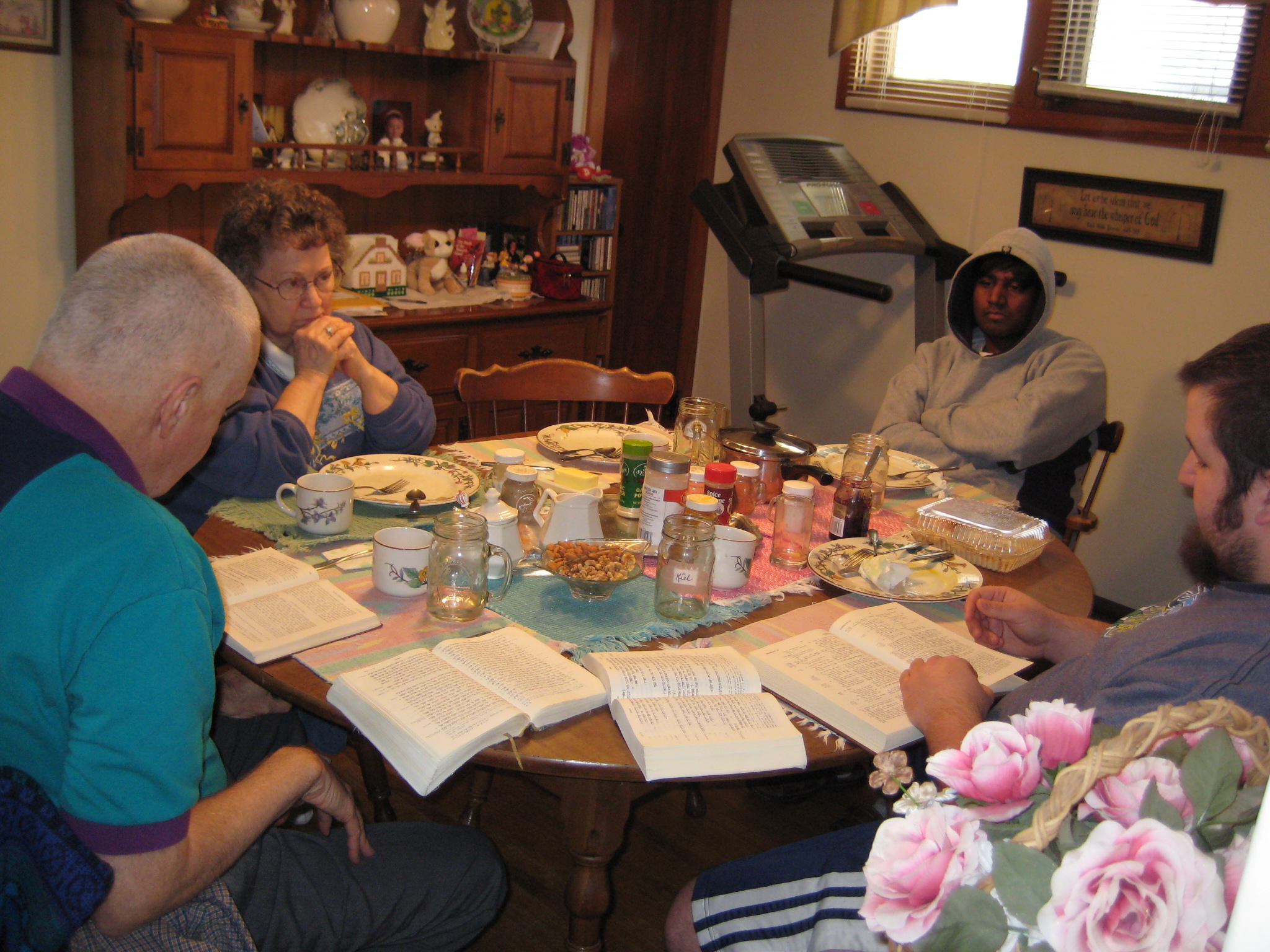
For practical purposes, it all began in the Autumn of 2002 when Adam Coffman from Indiana, and Jeffery Gujjarlamudi from India crossed paths on the campus of Kentucky Christian University in the small town of Grayson in the Appalachian foothills. It was at this school that they slowly forged a friendship by sharing with each other the mutual struggles and experiences they each had endured as servants of Jesus Christ. Though they came from two vastly different worlds, they recognized in each other, the similarities that Christ had authored into their lives.

In those early days, the campus life at Kentucky Christian University was fraught with hidden perils and discouraging pitfalls of all kinds. Thus it was, that in a small corner of the guys’ dorm, Waters Hall, Jeffery and Adam began to fortify a place of refuge among the chaos and ruin that plagued the college grounds.

In the midst of their unexpected ministry opportunities, (while paying thousands of bucks to get their degrees) the two friends often found sustenance in that staple of college-life foods known to many as Ramen noodles.

However, the pre-packaged spice packets that accompanied these sodium laden rations were ultimately unsatisfactory to Jeffery’s attuned Indian taste buds. And in a moment of divine significance, Jeffery remembered that his mother had imparted to him upon the day of departure from his homeland a small package of Indian Spices known as “Curry spices” and “Garam Masala.”

Thus it came to pass, that sometime in the early spring of 2003 Adam and Jeffery received what can only be termed as a flash of divine insight, as they were inspired to combine Ramen noodles with Garam Masala and Chili Powder – along with some clarified butter known as ghee.

And so, as the East met the West in that tiny pot of noodles, the gloom of their environment subsided briefly as the divine wind of change and revival blew in from the heavens.

Thus it was, that an entire year went by which held many trials and adventures for the unlikely friends who labored under the darkening sky of a land lost in its own shadows.

Tales of those times have been told elsewhere, but what is important to tell here, is that Jeff eventually imparted the ancient wisdom of curry-making to Adam, as it had been handed down from his parents Sam and Esther.

Eventually, now in another room of the same dorm, Jeffery brought forth a gift that had been carried to him by his parents upon a recent visit from India. This gift was a jar of Mutton Pickle, which is essentially a combination of fried pieces of lamb and tomato sauce preserved in an extremely potent mixture of heavily concentrated Indian spices. Just one small spoonful of Indian Pickle is enough to flavor an entire bowl of rice, which at this point had replaced noodles as the preferred form of carbohydrate. Jeffery would later share other jars of assorted kinds of Pickle (such as Tomato, Lime, Spinach, and Mango) that his mother had prepared for the growing number of people who began showing up to share in the food and fellowship that God had provided.

In the Spring of 2004, Jeffery and Adam met Kiel Nation, a young lad from the region of Lexington, Kentucky. During the next several months, and on into the following autumn, Kiel became the third member of the Curry House Posse which was at that time still in its infancy.

It was at this time that Adam journeyed forth into the wilderness, as God had ordained that his time in the foothills of Kentucky was at an end. And so he set out for his homeland in Indiana, leaving Jeffery and Kiel to carry on the work that God had begun on the campus.

It was at this time as well, that the Lord brought into their midst one Keith Doyle, a humble brother from Cuyahoga Falls, Ohio. Keith moved into Jeffery’s room and the three brothers still left on the campus began to propel the sharing of food and fellowship to another level.

As the brothers, Kiel, Keith, and Jeffery began to meet and host more and more guys in the Waters Hall dorm; eventually the need arose to produce entire dishes of Indian cuisine.

And so, in direct insubordination of school policy, and working in secret, like the Roman Christians hiding in the catacombs of the Second Century — (because there were, in those days, a couple of immature, jerks in charge of the dorm) the three brothers would cook dishes of Vegetable Curry, Chicken Curry, Beef Curry, or variations of these and other ingredients each night throughout the week for whomever wished to come.

As a side note, Curry is a general term used to denote that ingredients have been cooked in a sauce of Indian spices. Common blends of Indian spices generically labeled as ‘Curry’ might contain coriander, cumin, chili powder, fennel seeds, cardamom seeds or powder, mustard seeds, turmeric, or several other variations of spices such as fenugreek, paprika, cloves, and cinnamon. Along with these spice combinations, onion, garlic, and cilantro are essential ingredients in almost every dish given the name Curry.

And for the next two years, the brothers continued the ritual of serving food in their rooms to those who came in search of food and fellowship. There were no regulations, no rules, and no expectations of any kind… only a desire to serve the Lord by serving others, and giving freely to others as Christ had freely given to them.

Engaged in many struggles these three brothers fought their way through a gauntlet of malicious principalities aligned against them. Yet through God’s provision they eventually graduated, and upon their departure from Kentucky Christian University, Keith went to live in Lexington, Kentucky, and Jeff and Kiel, now rejoined by Adam began attending Winebrenner Theological Seminary in Findlay, Ohio.

Throughout the fall of 2007, and the winter and spring of 2008, Jeff, Kiel, and Adam would voyage to the home of Gary and Janet Staats in Findlay a couple of nights a week where they would make Curry and attend the seminary. Because Dr. Staats and his wife are extremely hospitable people, they began opening up their house each Tuesday night for those at the seminary to come and enjoy the fellowship meal as well.

Alas, by the summer of 2008, the Lord had called these four brothers out of their homes in Kentucky, Indiana, and Ohio, and directed them to reside in a house which he had provided for them on the main street of Findlay. And so it is, that these four brothers, doing only what their Lord had trained them to do over the years, continued to cook food and invite whoever happened along to join them in camaraderie.

____________________________________

Well, like I said, that was 16 years ago.

These past few weeks, I’ve been editing a series of videos that I captured, haphazardly, during that time – and which have just been sitting in my computer all these years.

The Curry House, which evolved into the first church I pastored – Night Church – still remains, to this day, a phenomenon of Christian community which I have often looked back to, as a reference point, and at the same time, a cause for lamentation at the fact that I have no idea how to re-create it.

It was special, powerful, beautiful, and unique.

It was something that the Lord did, and those of us who experienced it, were simply along for the ride.

Here’s the video I edited of it, which is my primary motivation for making this post. 👇

The Cost of Being a Disciple of Jesus

FeaturedThe Cost of Being a Disciple of Jesus

DISCLAIMER: I originally wrote this sermon four years ago, in August of 2020. If you want to listen to it, I’ll embed the audio version at the bottom of this post.

But I’m trying to publish more regularly on this blog because that’s what you’re apparently supposed to do…

So, I pulled this one out of the archives, because it’s a real humdinger. And you should read it. Seriously, it’s a good one, if I do say so myself.

____________________________________

This morning, we’ll be reading through a passage from Luke 14:25-33.

But before we take a look at this passage in Luke, I want to tell you a story that’s a little bit closer to us in history. This isn’t something that happened 2,000 years ago, but much more recently.

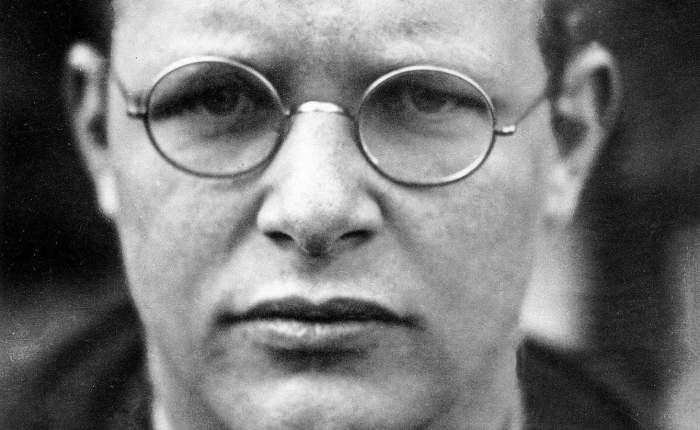
It begins about a hundred years ago, in a city called Breslau. Breslau is in the southwest of Poland today, but a hundred years ago, and up until the end of World War II, it was still a part of Germany. And that’s where this story begins – in Breslau, Germany, a hundred years ago, in 1920, when a young man by the name of Dietrich gave his life to Christ, and decided that he wanted to study the Bible and become a teacher of God’s word.

Dietrich was a very intelligent young man, very devoted to his studies; by 1927 (when he was only 21 years old) he had graduated from the University of Berlin with a doctorate in Theology. Still young, and not quite sure where his place was in the world, he decided to come here to the U.S., and ended up as a professor at Union Theological Seminary in New York City. He was only in the U.S. for one year, but while he was here, he was lovingly accepted into a Baptist church in Harlem, where he taught Sunday School classes, and where he began to encounter the societal injustices being experienced by Christian minorities – in particular, black Christians that he had become friends with. As a white man, but still an outsider, a foreigner from Germany, he had slipped in between these two segregated worlds of American Christians – black and white, rich and poor, educated and uneducated. Dietrich knew his Bible really well. In the Gospels, he read, as we have been reading, about the reality of God’s Kingdom in the here and now. And he wrestled with the contrast between what he was reading about the Church in the New Testament, and what he was seeing the Church do (and not do) in New York and other places.

How could the Church in the New Testament be so united in purpose, and the Church of modern day be so fractured and divided?

Why was the wealthy Church so pre-occupied with its own position on the highest levels of secular society, and so blind to the suffering of the poor Church just a few blocks North?

How does that happen among God’s people? How does one group of Christians become obsessed with finding a seat at the table of high society, while another group focuses on pulling people out of the gutters and giving them food, and clothing, and housing?

Why do the Christians with the most resources at their disposal, hoard their wealth, while those with just enough to get by give away everything they have? Why can’t they work together? Why can’t they find balance in the community of God’s Kingdom – the community of people saved by grace – the community that Jesus gave his life to bring into existence?

What was the answer to these questions?

What could be done about it?

Dietrich wasn’t entirely sure, but he didn’t ignore these tough questions; he wrestled with them. And this unique perspective that he had, as an outsider and foreigner, influenced him a great deal. And he took that perspective with him, when he returned to his homeland in 1931.

When he returned to Germany, he began teaching theology at the University in Berlin where he had received his doctorate four years earlier, and not long after that, he was ordained as a pastor in the Lutheran Church.

And, it was less than two years later, on January 30, 1933, that the Nazis took control of his country.

As we all know now, with our 20/20 historical hindsight, Adolph Hitler’s rise to power would eventually culminate in the horrendous disaster that we call World War II, where millions of people would perish, and where terrible things had to be done in order to stop a man that was closer to an example of the Anti-Christ than almost anyone else in history.

Have there been others like Hitler?

Yes.

Joseph Stalin probably executed more people, for instance. But Hitler did three things that really single him out:

1. He lied to the Christians in Germany that were susceptible to deception.

2. He silenced, imprisoned, and killed the Christians who were not so easily deceived.

3. He waged genocide against the Jewish people.

If Hitler had succeeded in taking over the WHOLE WORLD, he would have been THE Anti-Christ.

As it turned out, he was only one of the many little antichrists like those the Apostle John warned us about in his first epistle (1st John 2:18).

Like I said, we all know this now. It’s more or less common knowledge. But to many of the Christians throughout Germany at the time Hitler took power it wasn’t as clear. Even though it SHOULD HAVE BEEN.

Hitler’s rise to power was hailed as an act of God by the majority of church leaders in Germany at the time. They threw their support behind him completely – telling their congregations that Hitler had been sent by God to lift them out of economic depression, and restore their honor on the world stage. Some went so far as to say that Hitler spoke on God’s behalf, and that the fulfillment of God’s Kingdom was embodied in the person of Adolph Hitler. Churches that had been firmly established and rooted in place for centuries, wasted no time in allowing Hitler to steam roll his way through them. In fact, they stepped aside as he removed Pastors, Bishops, and Elders who were not “pure-bloods” of Aryan descent. They remained silent when he demanded that he, the Fuhrer be recognized as head of the Church (rather than Jesus Christ), and they supported efforts made to remove the Old Testament from the Bible – because of its pro-Jewish agenda. These were not things that happened overnight. They were ideas that Hitler had been preaching for months BEFORE he was in power. There was plenty of opportunity for the churches in Germany to at least try to prevent his ascension to power – by speaking out against him. But those with the most influence in their society, remained silent. Or they openly supported him.

But not everyone.

There were small groupings of Christians in Germany, in the middle of all that madness, who refused to bow down and worship that man.

And the hero of this particular story – Dietrich – was among them.

Just a couple of days after Hitler became Chancellor, Dietrich was able to get onto a radio station in Berlin and sound the alarm.

Before they cut him off mid-sermon, he denounced Hitler and everything he stood for – and he rebuked every Christian who followed him for their idolatry to the “cult of the fuhrer.”

In the months and years that followed, he began organizing the minority groups of Christians who didn’t follow Hitler, by helping to create a network of churches dedicated to voicing opposition to him, as well as to rendering aid to their Jewish neighbors who were already under attack. He was putting into practice what he had learned when he was in New York – that he couldn’t just talk about the Gospel – he had to live in its reality. He couldn’t just stand around and do nothing while so much evil was taking place around him. He had to actually do something about it.

So, he did.

Between 1933 and 1939, he helped organize and lead an underground seminary where he taught his students that the cost of being a modern disciple of Jesus was complete loyalty to the King and His Kingdom, above all else. –Even if it meant losing your friends, losing your family, or losing your country.

And for this, Dietrich was branded an enemy of the state, his coalition of churches and his seminary were deemed illegal by Heinrich Himmler, and Dietrich himself was exiled from the city of Berlin.

Dietrich’s friends in New York City urged him to flee the country, and he did in the Summer of 1939. But he did not stay in the United States for very long. In a letter to one of his former professors at Union Seminary, this is what he wrote, shortly before returning to Germany:

“I have come to the conclusion that I made a mistake in coming to America. I must live through this difficult period in our national history with the people of Germany. I will have no right to participate in the reconstruction of Christian life in Germany after the war if I do not share the trials of this time with my people … Christians in Germany will have to face the terrible alternative of either willing the defeat of their nation in order that Christian civilization may survive or willing the victory of their nation and thereby destroying civilization. I know which of these alternatives I must choose but I cannot make that choice from security.”

It wasn’t long after his return home, that because of close trusted contacts within the German military, he first became aware of concentration camps where Jews were being systematically exterminated. And that put Dietrich in the position of finally having to choose, definitively, which of his two kingdoms he would betray.

Would he become a traitor to Germany? Or would he become a traitor to God’s Kingdom, by looking the other way as his neighbors were being murdered? He chose God’s Kingdom over the kingdom he had been born into.

When asked by a Dutch colleague of his at the time, “what he was praying for these days?” Dietrich told him, “If you want to know the truth, I pray for the defeat of my nation.”

And that’s when Dietrich became a spy.

He began working within the Abwehr – the German Military Intelligence network –which was not yet under the control of the SS. There were many German officers in the Abwehr, already functioning as allied spies against Hitler. They recruited Dietrich with the understanding that he would use his contacts in Europe and the United States to smuggle intelligence to the Allies, and to help Jews escape from Germany. And that’s what he did for the next few years…

Before he was eventually caught and arrested in the Spring of 1943.

Dietrich spent two years in prison for treason, during which time he was the pastor for his fellow prisoners, and even some of his prison guards.

On April 4, 1945 Hitler personally ordered Dietrich’s execution, and he was hung that same week at Flossenburg Concentration Camp.

Two weeks later, the U.S. 90th and 97th Infantry Divisions liberated that camp.

A week after that, the Soviets took Berlin.

Hitler committed suicide at the end of the month, and Germany surrendered on May 7th.

Dietrich’s prayers for the defeat of his nation came to pass. But he himself, had already gone home to his real country.

The doctor who saw Dietrich’s hanging described his final moments like this:

“I saw [the] Pastor … kneeling on the floor praying fervently to God. I was most deeply moved by the way this lovable man prayed, so devout and so certain that God heard his prayer. At the place of execution, he again said a short prayer and then climbed the few steps to the gallows, brave and composed. His death ensued after a few seconds. In the almost fifty years that I worked as a doctor, I have hardly ever seen a man die so entirely submissive to the will of God.”

And that brings, the story of Dietrich Bonhoeffer to a close.

Now… why am I telling you all of this? Why is this story an important one?

Well, let’s finally get to Luke 14:25-33, and you’ll see why…

“Large crowds were traveling with Jesus, and turning to them he said: 26 “If anyone comes to me and does not hate father and mother, wife and children, brothers and sisters—yes, even their own life—such a person cannot be my disciple. 27 And whoever does not carry their cross and follow me cannot be my disciple.

28 “Suppose one of you wants to build a tower. Won’t you first sit down and estimate the cost to see if you have enough money to complete it? 29 For if you lay the foundation and are not able to finish it, everyone who sees it will ridicule you, 30 saying, ‘This person began to build and wasn’t able to finish.’

31 “Or suppose a king is about to go to war against another king. Won’t he first sit down and consider whether he is able with ten thousand men to oppose the one coming against him with twenty thousand? 32 If he is not able, he will send a delegation while the other is still a long way off and will ask for terms of peace. 33 In the same way, those of you who do not give up everything you have cannot be my disciples.”

Now, those are some harsh sounding words, are they not?

There’s a huge crowd following Jesus, and instead of reveling in all of his many followers, it’s almost as if he’s trying to get rid of them. He tells them they can’t follow him unless they hate everyone else… that they even have to hate their own life! Now, he doesn’t mean this literally – that they have to hate. After all, this is Jesus – he teaches us to love everyone, even our enemies.

So, he’s not literally telling us we have to hate ourselves and our families. He’s saying that His Kingdom always comes first. The Kingdom always takes precedence. He’s saying that our love for Him has to be total. Our loyalty to Him has to be complete. He’s saying, if you really want to follow me, you might have to say goodbye to the people you care about. He’s saying: If you say ‘yes’ to me, you might have to say ‘no’ to the people you love.

Jesus is using this allegorical language about building towers and going to war, which might all sound a little strange to us. But he’s pointing out the natural human tendency to look ahead. If we’re being wise, then we think before we make a major decision about something; we think about what that decision is going to mean, and whether or not it’s going to be good or bad, and we think about what we’re going to have to give up, or let go of.

We have to estimate what it’s all going to cost.

How much money to build that building?

How many troops to win that war?

Well, we don’t have to estimate what it costs to follow Jesus; he tells us EXACTLY what it costs – it costs EVERYTHING.

Dietrich knew that. He knew it really well. He knew that we can’t just hide in the comforting glow of God’s grace – that to do so, cheapens the sacrifice that Jesus made. We have to go into the darkness with the light that we have.

We have to do something.

And whatever that is – it might cost us everything.

It MIGHT cost us family; It MIGHT cost us friends; It MIGHT cost us our country.

And if so, that’s ok.

That’s what it means to pick up YOUR CROSS and FOLLOW HIM.

In John 15:18-19, Jesus said quite clearly: “If the world hates you, keep in mind that it hated me first. 19 If you belonged to the world, it would love you as its own. As it is, you do not belong to the world, but I have chosen you out of the world…”

Let’s remember these words of Jesus in the coming months.

Let’s hold tightly to them, as the rhetoric in the world around us becomes louder, and the nonsense becomes overwhelming. Our job is still the same: To love our neighbors, to love our enemies, and to love God the most.

The kingdom we’re living in is temporary; it is crumbling. But the Kingdom we belong to is eternal, and it will never fall.

There won’t be any Democrats or Republicans in Heaven, my friends.

“Then the sovereignty, power and greatness of all the kingdoms under heaven will be handed over to the holy people of the Most High. His kingdom will be an everlasting kingdom, and all rulers will worship and obey him.” – Daniel 7:27

BEATLES Mug

Mug - 16My dad really likes this mug. I’ll admit, The Beatles have never been my favorite band, but I do enjoy their timelessly catchy tunes as much as the next average joe. Of course enough has already been said about them and the deep imprint they have left in the history of modern music and culture–I couldn’t possibly say anything new about all that. But for me personally, when I hear The Beatles (or drink coffee out of their yellow submarine), it brings back memories of all the music my dad and mom listened to… Especially the music they listened to when I was a kid, and the stations they would tune into during long trips in our family’s old Astro mini-van. I remember hearing as much Elvis and Creedence Clearwater Revival as I did The Beatles. Sometimes my mom would bring her cassette tapes and Amy Grant would all the sudden find herself doing an encore for The Beach Boys. I was too young to understand or care about the differences. My parents’ music all blended together. One moment we’d be listening to John Denver sing “Rocky Mountain High” and the next we would be hearing tunes from the traveling Gospel quartet who had been visiting our church a week earlier, peddling their cassette tapes along the way. My parents religiously (pun intended) bought the tapes of every person and group that came through our church–I’m not kidding. A few years ago I found a box that had close to a hundred cassettes in it–all from people who had visited our church over the years to share their music.

The point is… My parents didn’t play music, and they didn’t sing either, but they loved to listen and they loved to collect it. And they taught me to explore the art form on my own, and to discover for myself what I liked and what I didn’t. I think I was in 5th or 6th grade when I started really getting into music enough to want to own the stuff I liked. My parents would buy me blank cassettes, and then I would record stuff right off the radio. I remember hearing the DJ on 99.5 WZPL announce a song that was about to come on, and I would dash across the room so I could hit Play & Record on the tape deck. And my older cousins had tapes that they would let me copy. My cousin Toby introduced me to Bon Jovi’s “Slippery When Wet” — changed my life. That was back when Jon Bon Jovi was an actual rockstar, before someone kidnapped him and removed all the testosterone from his body.

My early musical tastes were widely diverse. By the time I was in high school I was practically in love with Amy Grant, because I had been hearing her sing since I was in kindergarten. But that didn’t stop me from listening to Soundgarden or Metallica, and REO Speedwagon when no one else was around. I remember one time I was in an IRC music store with my dad, and he was letting me pick out an album for my birthday–I chose “Appetite for Destruction” by the infamous Guns N’ Roses. He just shook his head and said, “OK, but don’t show mom.”

Like I said, my parents really let me figure the whole music thing out on my own. When I was young, I heard what they liked, and as I grew older, they gave me the freedom and independence to decide what kinds of music I liked. Just because they didn’t like something, or because some dumb televangelist like Jimmy Swaggart said it was evil, didn’t mean they would stop me from listening to it. And I’m so grateful for that now. They never bought into all the crap about “christian” music versus “secular” music, and how non-Christian music was all from the devil. My youth pastor and his wife were the opposite of my parents when it came to music. They were good people, and I learned some good things from them, but their views on music were not among the lessons I chose to retain. I always thought it was kind of funny that they cared so much about it. I mean, at the outset of every trip we took, they would assign a student to go around checking everyone’s music to make sure no one had anything non-Christian with them. It was fascist and imperial. And we all know the proper response to something imperial–(thank you, Star Wars.) So I made it my mission to sneak as much non-Christian music as I could on board the church bus. And I was successful at it too. I was a supplier for the handful of other “rebels” as well.  How did I accomplish this? How was I so great at smuggling contraband past the music police? Simple. My parents would let me use the outer cases of their Christian music CDs and cassettes to camouflage my music on the inside. When they came around to check my music, they would just see Michael W. Smith, Carmen, and of course Amy Grant… Never knowing that inside was Nirvana, Pearl Jam, and The Doors. Well, ok… Some of the Amy Grant cases actually had the Amy Grant cassettes in them.

Of course when I journeyed off to Christian college, things were on a whole new level. There was no actual rule against having non-Christian music, just a heavy fog of rampant judgmentalism toward those who did. I discovered this firsthand when the worship leader who lived next to me in the dorm almost had a stroke after seeing the Led Zeppelin poster on the outside of my door. I discovered it even more when during my second semester, my room was broken into and all the band posters (including a 6 foot Sgt. Pepper’s display) were all ripped from the walls and replaced with notes warning my roommate and I about our impending journey on the highway to Hell. But we had fun with that sort of thing. A few of my friends got together one night and did a live cover of Jimi Hendrix’s Purple Haze for the entire campus. That didn’t go over too well. But anyway… “we all want to change the world.”

And it’s great, what kind of memories a coffee mug can conjure up.

Originally posted on Instagram @ajcoffman and Facebook on December 4, 2014

Laura’s Mug

Laura’s Mug
Laura's MugI really love this mug. There is none other exactly like it on planet Earth. It was a gift from my friend Laura, a.k.a. @sweetlauralai (she also painted it herself, which makes it even more awesome). I met Laura at Kentucky Christian University back in 2002. I was skeptical at first. My bros and I were a close knit group. To be honest, there weren’t very many girls that you could just have fun hanging out with on the campus back then. They were either the kind who looked down at you for listening to ‘non-Christian’ music, watching rated R movies, and wearing jeans to chapel services–or they were the kind who just wanted to graduate with their MRS degree. There were some exceptions of course. Laura was one of the exceptions. I realized that when she was hanging out with us dudes one night, and during a conversation she just lifted her leg up and farted really loud–then went on like nothing happened. We were buddies after that. I think Laura was only at KCU for about a year or so before transferring to Johnson Bible College (now Johnson University), but we still stayed in contact and whenever our larger group of friends would come to my parent’s house to visit in Indiana, she was usually there. These days, I haven’t talked to her for quite awhile, but I still remember how fun it was to hang out with such a great sister, and I especially miss those times we would have long talks and pray together. I’m also really happy that this mug has survived all these years intact. I still have plenty more to talk about, and I’ve enjoyed sharing the others so far, but I think this one is my favorite.
Originally posted on Instagram @ajcoffman on April 16, 2014